Nobody leaves their home unless they are forced to leave their home.
For many of us, home is a place we return to at the end of the day. It is where we feel safe, where we are surrounded by the people we love, and where we can dream about tomorrow.
But for millions of people around the world, home has been taken away by conflict, poverty, discrimination, or natural disasters. They did not leave because they wanted to. They left because they had no other choice. At Everyday Refugees Foundation, we have learned that home is not always a physical place.
It is the sense of belonging people carry with them, even when everything else has been lost. It is the safety, love, and dignity that parents work tirelessly to provide for their children, no matter where they are. It is the hope of creating a better future, even in the most difficult circumstances.
Today and every day, we honor the courage, strength, and resilience of refugees and displaced communities around the world. We remember that behind every statistic is a human being, a family, a dream, and a story.
At a time when displacement continues to reach record levels, it is more important than ever to look beyond labels. Refugees are not defined by what they have lost. They are defined by their humanity, their perseverance, and their determination to rebuild their lives.
Through our work, we believe in documenting, educating, helping, and empowering. We believe in creating opportunities, supporting communities, and ensuring that people are seen not for their circumstances, but for who they are.
Today, let us remember that everyone deserves what we all seek: a place to feel safe, to be loved, and to live with dignity.
Because home is more than a place. Home is safety. Home is hope. Home is dignity. This is our message to you on World Refugee Day.
Voices
Through the eyes of five female photographers from National Geographic, whom recently took over our Instagram feed and shared with us the moving stories behind some of their images showing the daily life and the struggle of refugees and displaced people in different parts of our world.
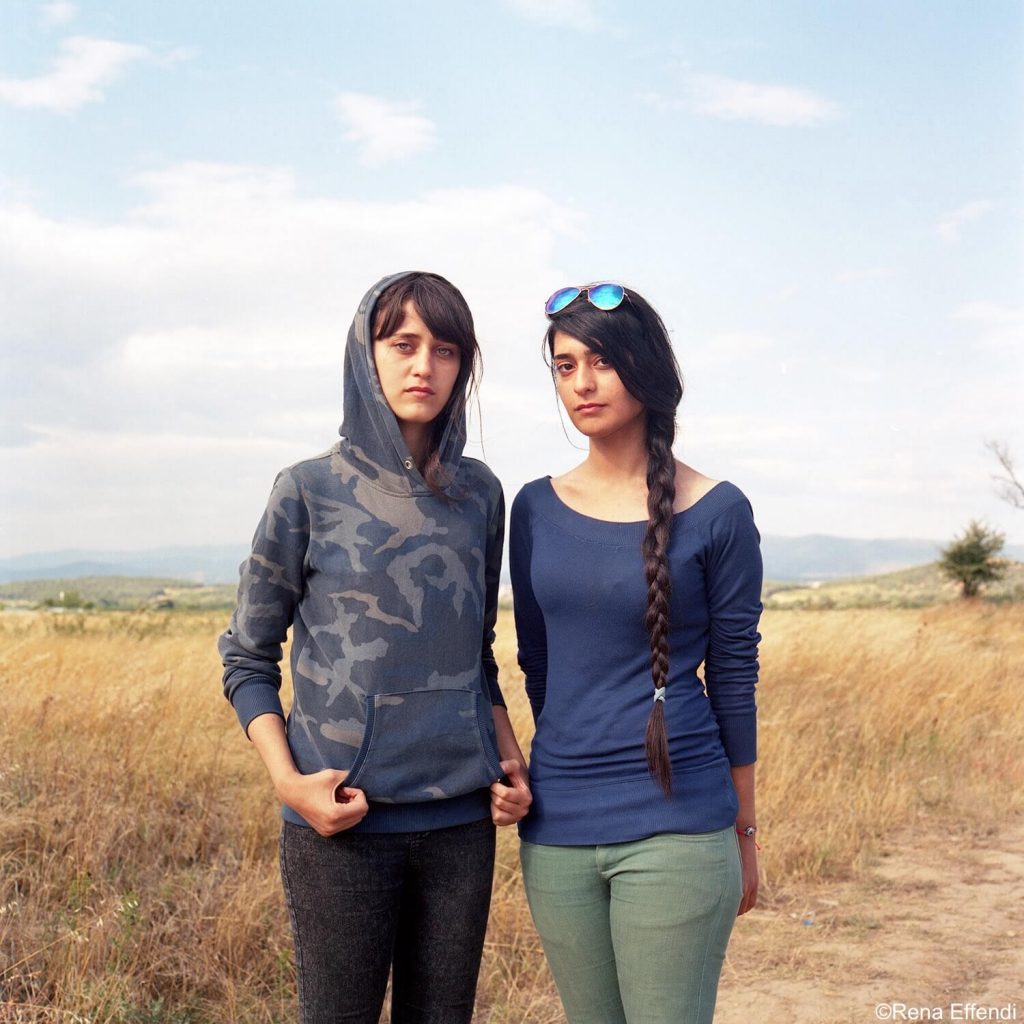
“I met Hevin and her friend, refugees from Aleppo in Idomeni, Greece. They camped for four days in the fields of Idomeni waiting for a chance to cross the border into Macedonia on their onward journey to Western Europe. I asked them to pose for a portrait and they were hesitant at first because they said they did not look good after sleeping in the fields for so long and wearing the same clothes for days. It took me some time to convince them otherwise. “People will make fun of our unkempt look” – they said. I told them that they were beautiful regardless of the hardships they had to go through. They finally agreed to be photographed and stood up looking back at me in quite defiance. I was amazed at these young women’s strength and perseverance”.
– Rena Effendi
Documentary Photographer.
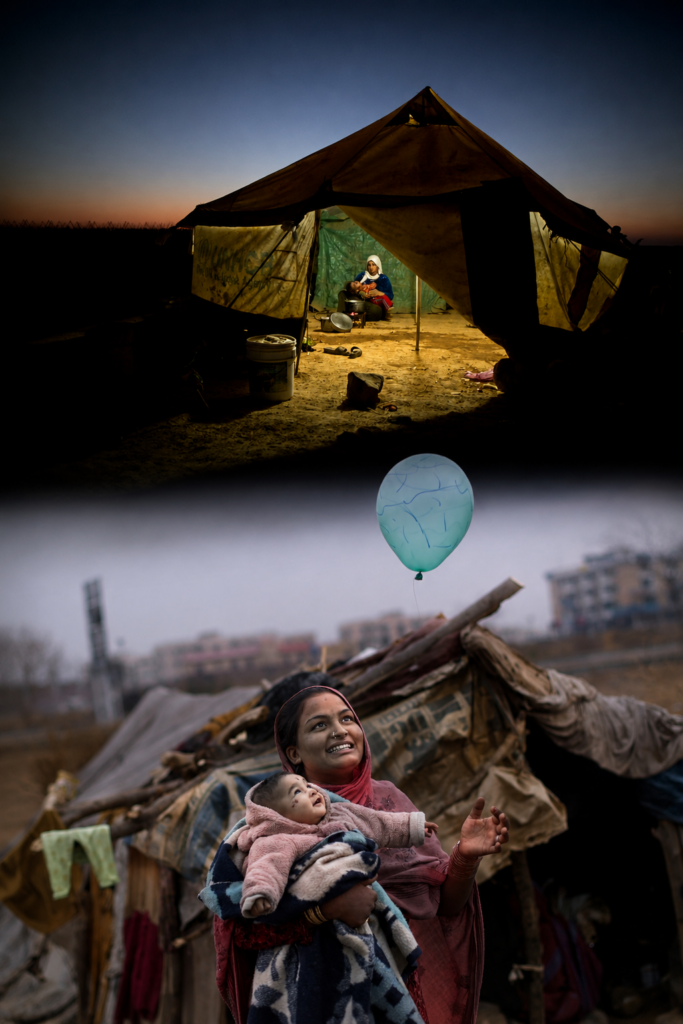
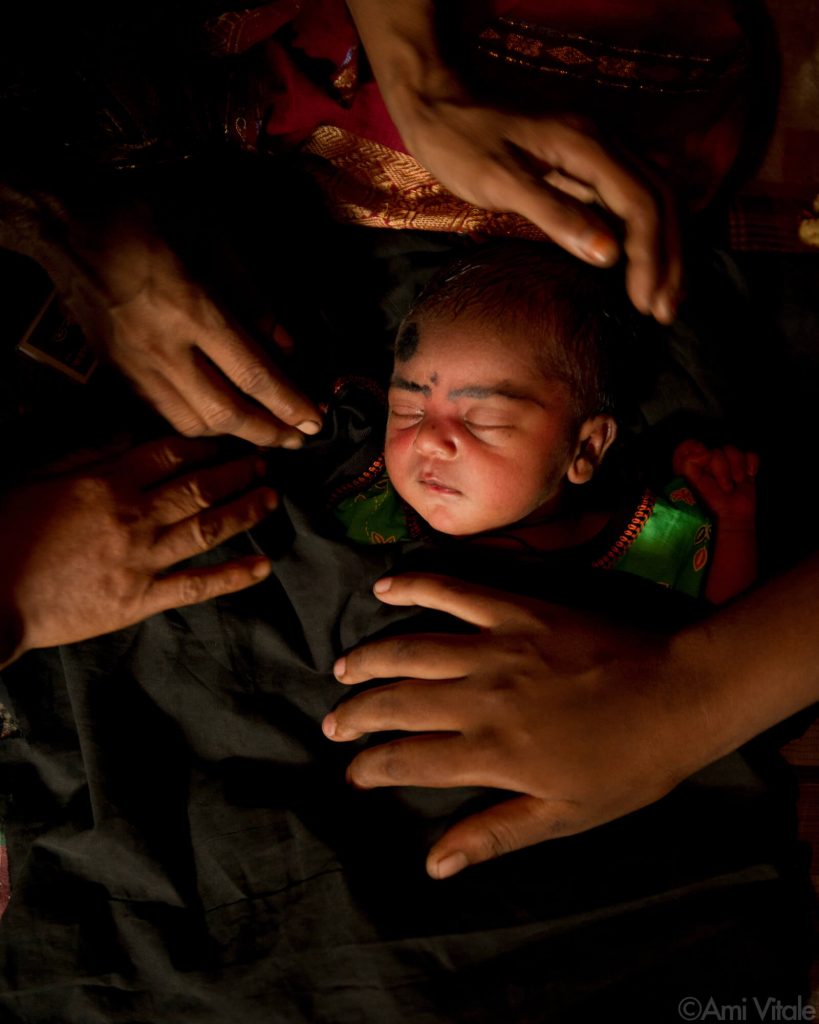
“Rahima Begum holds her one day old baby inside a slum in Dhaka, Bangladesh. She had been displaced because of rising waters and a changing climate and forced to migrate to the slums of Dhaka. Bangladesh is among the most densely populated countries in the world, where 28,000 people live per square kilometer in its capital city of Dhaka. The slum has no permanent sanitation and sewage facilities. As the sea level, and the temperature rise, bringing greater and more destructive storms and droughts, there is increasing awareness about climate refugees, whose numbers could far surpass refugees driven by conflict. Currently, however, there are no legal protections for those displaced by climate, and the penalty for inaction on climate change grows only more severe by the year. It will be felt most severely by those who least contribute to global warming”.
– Ami Vitale
National Geographic Photographer, Filmmaker, Speaker and Explorer.
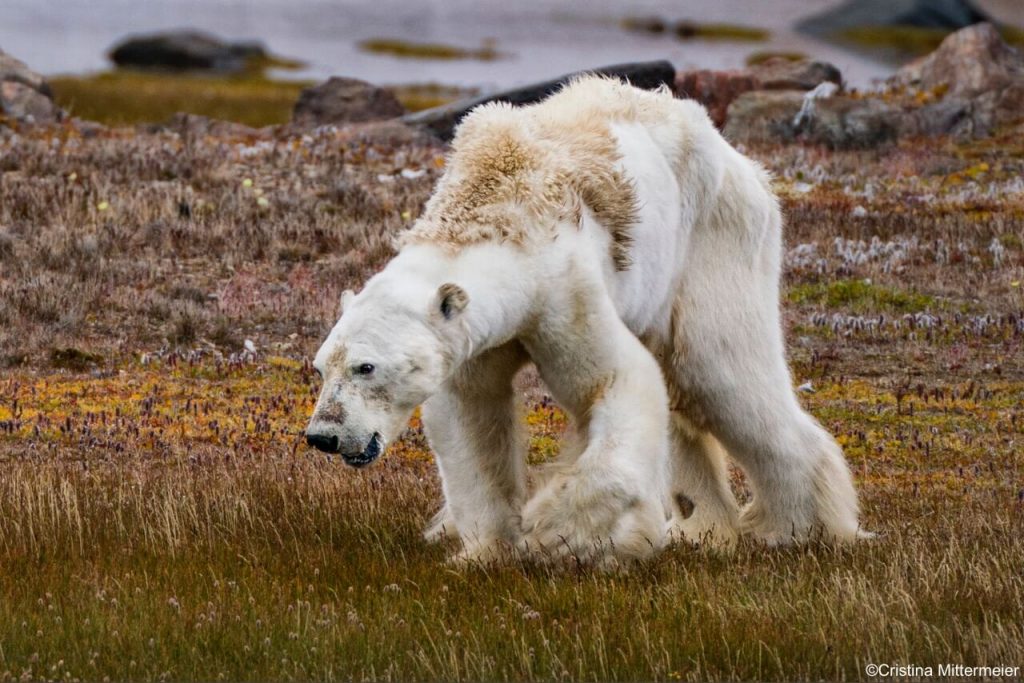
“In a climate change future that already is happening in many parts of the world, animals will too become refugees. When I photographed this polar bear who is clearly starving, I wanted people to imagine what the future will hold for Arctic wildlife, and all wildlife indeed as they lose their habitat to warming conditions around the planet, but especially in the polar regions. Without bold, immediate and visionary action on climate change, scientists predict we will see dramatic losses in polar bear numbers by mid-century. Regardless of what climate deniers might say, there is no denying that as polar wildlife loses its icy home, they too will become refugees, until they have nowhere else to go, at which point, they will likely become extinct”.
– Cristina Mittermeier
Co-founder of SeaLegacy, National Geographic Adventurer, Photographer and Speaker.
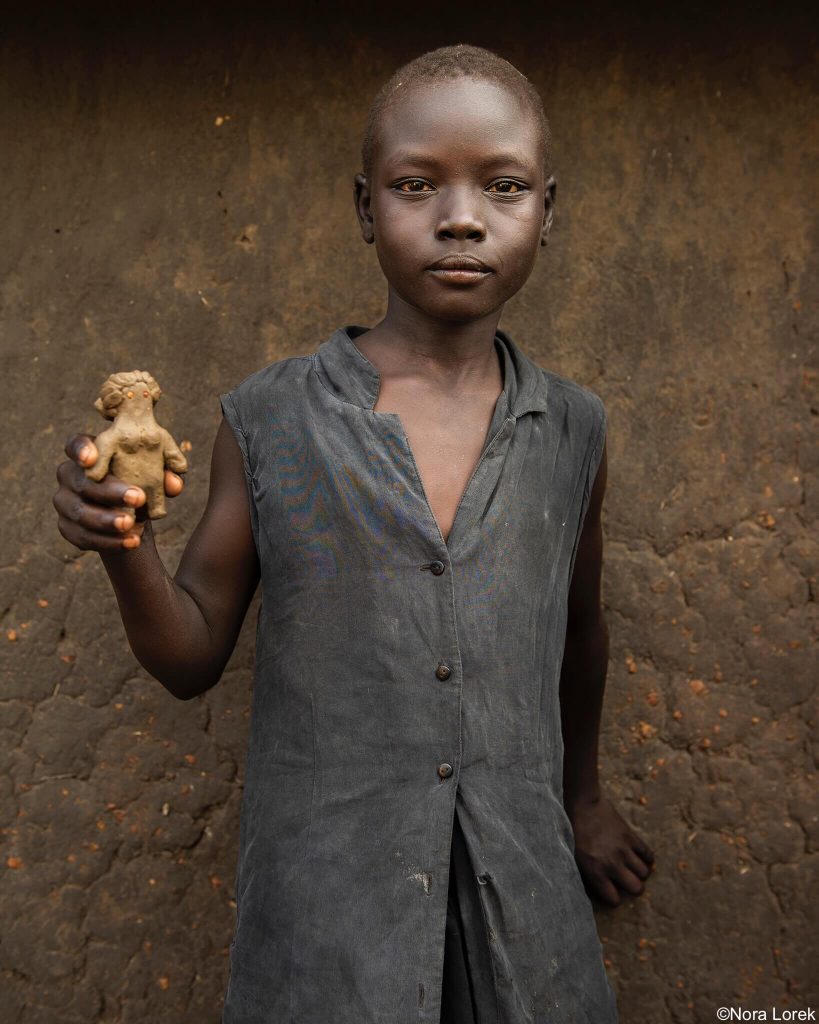
“Susan James, 10, holds her clay doll in Bidibidi.In Bidibidi, a remote refugee settlement in Uganda, South Sudanese kids create their own entertainment from mud, paper, and plastic. Here cardboard boxes from shipments of humanitarian supplies get a second chance as toy cars, trucks, and buses. These kids would have been the first generation to grow up in an independent South Sudan, if war hadn’t so quickly dispelled them. Today, more than 1 million children have fled the country, building new lives in refugee camps scattered in Uganda and other neighbors of South Sudan. Even in the most remote places, kids learn how to entertain themselves and for the nearly 200,000 children living in Bidibidi the malleable red dirt provides something to play with”.
– Nora Lorek
Freelance Photographer, co-founder of the Milaya Project, contributor National Geographic.
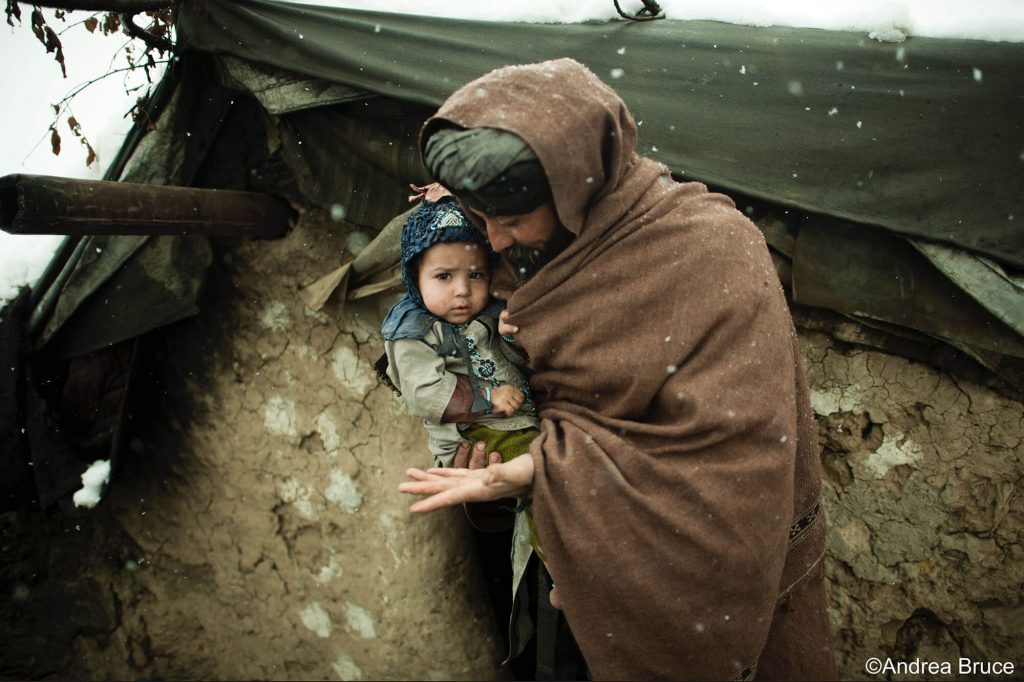
”Ibrahim holds his youngest son outside a mud hut where he lives with his wife and 11 children. The same camp buried at least two children who died due to the freezing temperatures back in 2012. They are among thousands of displaced in Afghanistan due to war”.
– Andrea Bruce
Photographer, National Geographic Explorer.
A better future for my children
Shortly after arriving on a dinghy from a deadly journey across the Aegean Sea. While waiting with others in hopes to board a train and continue her journey. While carrying her child as she makes her way on a railway track between countries. While having a moment with her children outside their tent or carrying her newly born son in a makeshift camp… Her answer remained the same; “A better future for my children, that’s what I hope and dream of”.
To recognize women all over the world for their achievements without regard to divisions, whether national, ethnic, linguistic, cultural, economic or political, every year the world marks International Women’s Day on the 8th of March.
Nobody leaves their home unless there are forced to
“Nobody leaves their home unless they’re forced to leave their home, and that’s what I try to show in my images.” Muhammed Muheisen in an interview with Global Citizen.
“I like to portray people with pride. They trusted me, they respected me, the least I can do is show their pride,” he continues. “Show their picture, never invade their privacy. And this is happening, you know, it’s not like this scene doesn’t exist. It exists, so simply I just document it.”
“If it’s in Jordan, or Greece, or Afghanistan, or Pakistan, it’s a picture that you can connect to,” he says. “That it can happen anywhere else in the world. And that’s the power of photography, we tell stories, we document things, for now, for tomorrow, or for the coming generations. To learn, to understand what happened.”
It’s this focus on the everyday, the fact that life goes on and never stops, even when you’re caught up in a refugee crisis, that led Muheisen to found the Everyday Refugees Foundation. Its focus is on helping refugees and internally-displaced people, whether from war, natural disasters, discrimination, or poverty.
A Dutch NGO, the Everyday Refugees Foundation was launched by Muheisen to share the stories of the daily lives of refugees and people who have been displaced, their struggles, and the “little sparks of hope that remain, despite their circumstances.”Read the full interview here:
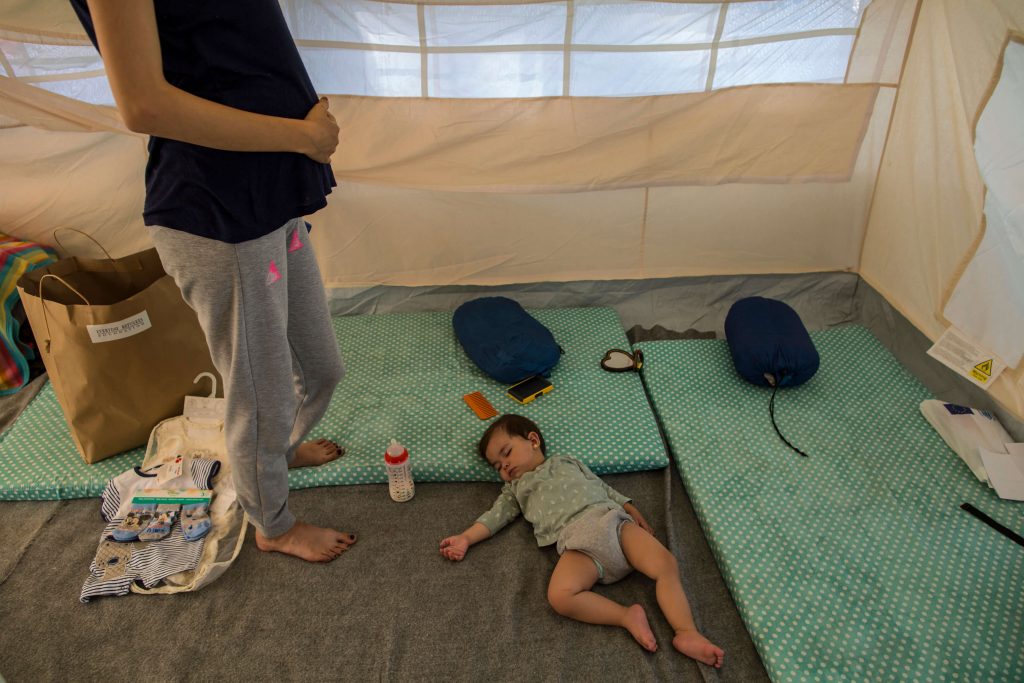
Since the second half of May 2018 our team is in Greece, where we are launching projects that aim to help and empower refugees in the country. After visiting several camps, we launched our main project “Mama’s Kit” according to what she needs the most and more.
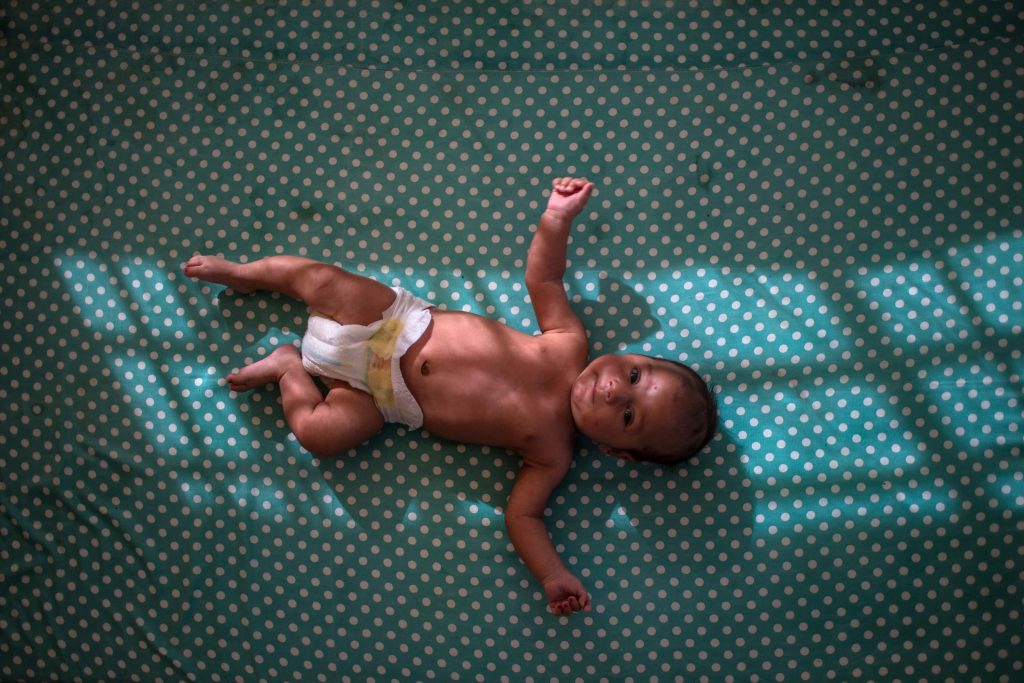
Part of our ongoing projects in Greece, focusing on infants and children today the 5th of September 2018 we delivered hundreds of outfits, contributed to our foundation by Pigeon Organics, for girls and boys in a camp northwest of Athens.
On the first day of the Muslim’s holiday of Eid al-Adha, Tuesday the 21st of August 2018, our team visited a camp north of the Greek capital and handed a gift to mothers and pregnant women, a full kit of the most necessary items for her newly born child part of our ongoing projects currently in Greece.
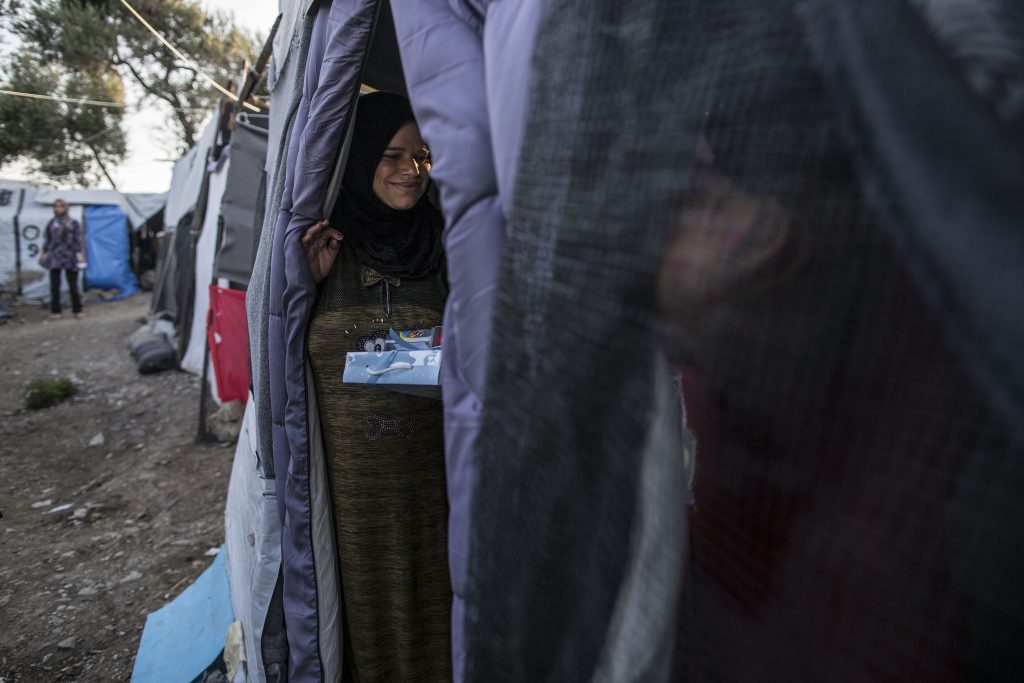
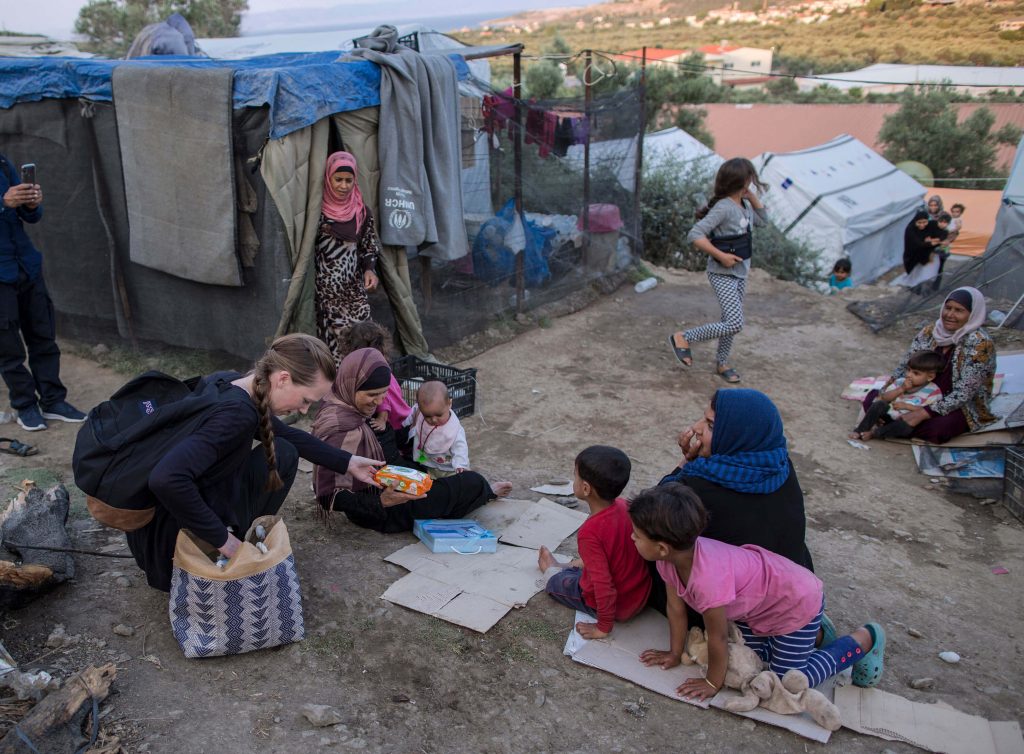
Last July, we were in the northern Greek island of Lesbos where thousands of refugees from Syria, Afghanistan, Iraq, Yemen, Mali and other countries are in the island waiting to leave and move on with their journey, among them are dozens of pregnant women and newly born babies.
We visited Moria refugee camp and spent time at the informal extension outside the camp and handed a small gift for infants and pregnant women.
Follow us along our projects in Greece and if you wish to be a part of this, do not hesitate to reach us on: contact@everydayrefugees.org
Muhammed Muheisen’s image of Zahra Mahmoud awarded picture of the year 2017
The UNICEF Photo of the Year 2017 shows the horrors of war and displacement, reflected in the eyes of a distraught child. Two-time Pulitzer Prize-winning photojournalist Muhammed Muheisen took the picture of five-year-old Zahra from Syria in an informal tented settlement near Mafraq in Jordan. Zahra’s face represents the quiet sadness of millions of children in crisis areas around the world.
For over a decade Muheisen has been documenting stories of refugees and internally displaced people around the world. He met Zahra and her family for the first time in 2015 and captured this winning picture in 2016 while working on a photo series ahead of the sixth anniversary of the Syrian civil war. “For me it is so important to focus on the most vulnerable ones, the children, and to tell their stories to the world,” explains the award winner in Berlin.
UNICEF Picture of the Year 2017
Stranded unaccompanied minors in Serbia by National Geographic
After fleeing war and hardship at home, unaccompanied young refugees are stuck in Serbia, dreaming of a Europe that doesn’t want them by Muhammed Muheisen, National Geographic.
Although he has produced images that speak to the suffering, despair, and pain of displaced people, he has also sought to change the narrative. “Wherever there is a war, there is life right next to it. If there is a funeral on the right, you can have a baby just born on the left. This is the theme of the work that I do.” Muhammed Muheisen in an interview with Lensculture.
“Everyday Refugees Foundation, che si occupa di sensibilizzare le persone di tutto il mondo sulla vita dei migranti e di aiutarli a stabilirsi nei paesi in cui vengono accolti in vari modi. Potete seguire il lavoro della fondazione grazie all’account Instagram @everydayrefugees: pubblica fotografie delle vita quotidiana dei migranti in tutto il mondo”.
We use essential technologies to run this site. With your permission, optional analytics and media technologies help us improve our work and share stories. Read our Cookies Policy.
Cookie settings
Essential technologies are always active. Choose whether to allow the optional categories.